EP 74: How to Protect Your Brain as You Age: 3 Practical Brain Health Habits

Your brain is supplied by arteries, and we want to protect our blood vessels because they are our brain’s lifeline.”

Dr. Daniel Kessler

Brain health is becoming one of the biggest concerns for people as they age. In conversations with the community on Amelia Island, more than 90% of people surveyed said their number one concern is brain health.

That concern isn’t limited to one town or region. It’s something people everywhere are thinking about more and more as they notice changes in memory, focus, and cognitive performance.

So the real question becomes:

What can people actually do to take care of their brain as they age?

In this episode of the Nassau Health Foods Organic Living Podcast, Dr. Kessler shares practical guidance rooted in his experience working with patients and studying brain health. The message is simple: start with the basics that support the brain every day.


Why Brain Health Is Connected to Vascular Health

One of the most important ideas discussed in the conversation is something many people don’t immediately associate with the brain:

Vascular health.

The brain depends heavily on blood supply. In fact, the brain uses about 20% of the body’s blood supply.

That means the condition of your blood vessels directly impacts how well your brain functions.

When blood vessels become inflamed or stiff, or when someone has uncontrolled high blood pressure, the brain can be one of the first organs affected.

This is why protecting the health of your arteries is considered essential for maintaining cognitive function.

Dr. Kessler describes blood vessels as the brain’s lifeline, emphasizing that brain health is closely tied to how well those vessels are functioning.


Understanding Pathways That Can Affect Brain Health

The discussion also references research from Dr. Dale Bredesen, who has studied cognitive decline and Alzheimer’s disease extensively.

One of the key ideas shared is that cognitive decline can develop through multiple pathways. Among those mentioned in the conversation are:

  • Inflammation
  • Blood sugar regulation issues
  • Environmental toxins

For example, some patients with Alzheimer’s disease have been described as having what is sometimes called type 3 diabetes, referring to the relationship between blood sugar regulation and the brain.

Environmental toxins can also play a role. As the environment becomes more toxic, substances entering the body can potentially impact the brain through the bloodstream.

Because of this complexity, brain health often requires looking at multiple factors rather than assuming a single cause.


Three Practical Brain Health Tips

While the science of cognitive health can be complex, the podcast conversation focuses on three foundational habits that anyone can begin working on.

These habits support the systems that keep the brain functioning properly.


Tip #1: Know Your Blood Pressure

The first recommendation is simple but important:

Know your numbers.

High blood pressure can develop silently, meaning people may have elevated levels without realizing it.

Tracking blood pressure regularly can help people identify whether their levels are within a healthy range.

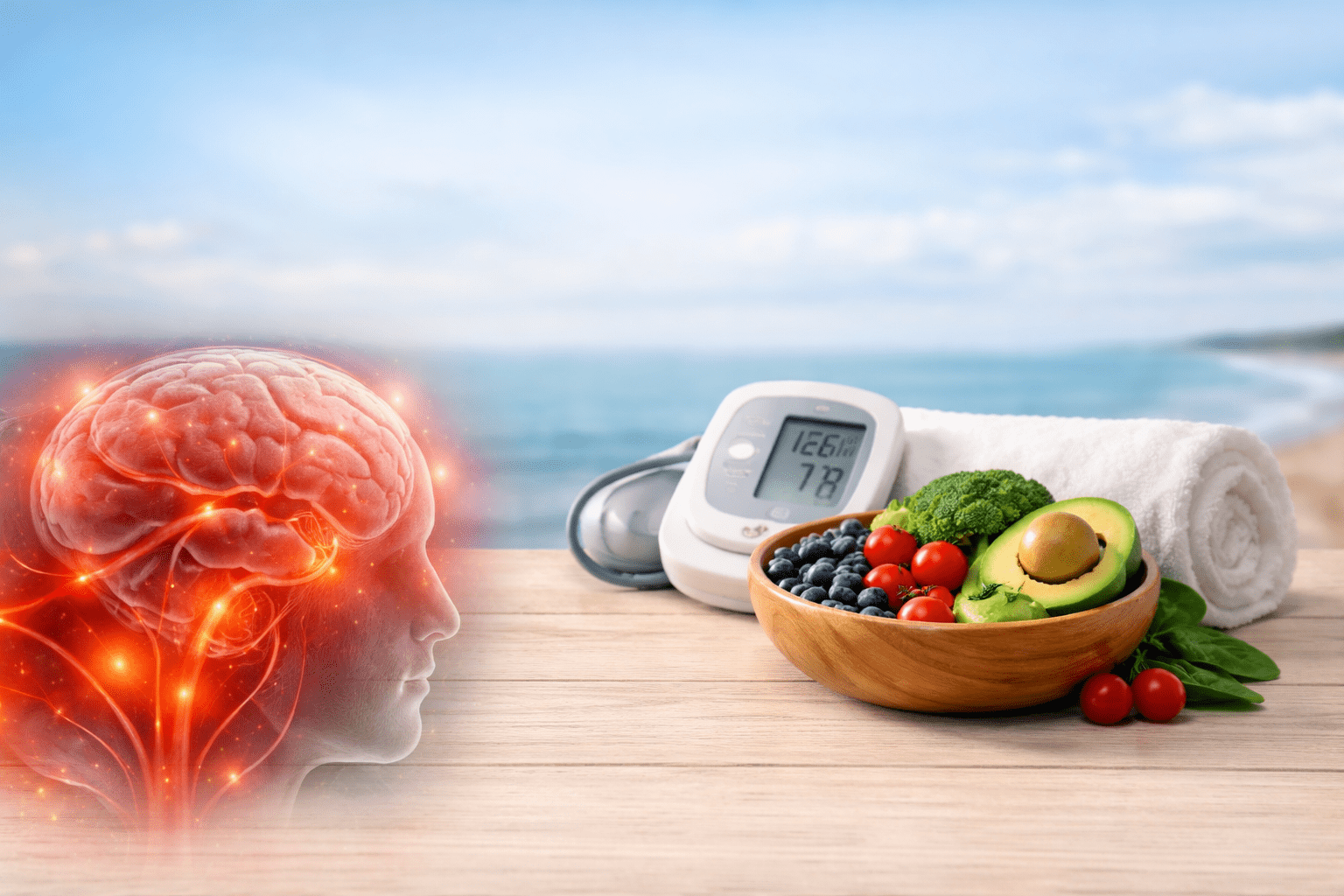
A simple home blood pressure monitor can be used to measure readings over several days or weeks and calculate an average.

Typical readings discussed in the conversation are around:

  • 120 for the top number
  • 70–80 for the bottom number

Another factor tied to blood pressure is stress.

When people experience stress or anger, their blood pressure may rise. That’s why simple actions like taking a moment to breathe and calm down can make a difference.

The key point is that blood pressure is often overlooked until it becomes a problem.

But for brain health, it’s something worth monitoring early.


Tip #2: Feed Your Brain With Intention

The second tip focuses on nutrition.

Many people have heard the phrase “food is medicine.”

But the conversation expands on this idea by emphasizing that we should also feed the brain intentionally.

Nutrition affects how the brain functions because the brain has very high metabolic demands.

One practical suggestion discussed is to eat a variety of colorful foods.

The example given is the colors of a rainbow:

  • Red
  • Orange
  • Yellow
  • Green
  • Blue
  • Indigo
  • Violet

Eating a wide range of colors can help provide nutrient-dense foods that support the body.

But brain health is not just about what we eat.

It’s also about how we eat.

Dr. Kessler encourages people to slow down and eat with intention, such as:

  • Sitting down with friends or family
  • Having conversations during meals
  • Putting away phones

These simple habits can help people reconnect with food and community.

Engaging with others also stimulates the brain, which supports cognitive activity.

Even simple interactions—like starting a conversation with someone—can help keep the brain engaged.


Tip #3: Prioritize Sleep

The third foundational habit is sleep.

Sleep plays a critical role in maintaining brain health.

During sleep, the brain:

  • Restores itself
  • Detoxifies
  • Maintains neural connections

One important chemical mentioned in the discussion is brain-derived neurotrophic factor (BDNF).

BDNF is associated with the brain’s ability to maintain and grow connections between neurons.

When sleep is disrupted, the brain’s ability to maintain these connections may be affected.

Sleep is also connected to several other health factors, including:

  • Blood pressure
  • Stress levels
  • Blood sugar regulation

Because of this, sleep is not considered optional.

Instead, it’s described as a biological necessity.

Practical sleep recommendations discussed include:

  • Going to bed before midnight
  • Maintaining a consistent sleep schedule
  • Keeping the bedroom cool
  • Reducing screen time before sleep

The goal is to allow the brain the time it needs to complete its natural restoration cycle.


The Brain’s Ability to Adapt: Neuroplasticity

One of the most hopeful ideas discussed in the episode is neuroplasticity.

Neuroplasticity refers to the brain’s ability to:

  • Build new pathways
  • Strengthen connections
  • Adapt over time

This means the brain is not simply a fixed organ that declines as people age.

Instead, it can continue to change and respond to lifestyle factors.

Learning new things, moving the body, improving sleep, and maintaining healthy habits all send signals to the brain that support these adaptive processes.

The conversation emphasizes that this ability exists at many ages.

People in their 40s, 60s, or even 80s can still benefit from supporting the brain’s ability to adapt.

A Patient Story: Addressing Root Causes

To illustrate how multiple factors can influence cognitive health, Dr. Kessler shares a story about a patient.

The patient was an executive in his early 60s who began experiencing significant cognitive challenges.

These included:

  • Difficulty performing executive tasks
  • Forgetting names
  • Struggling with numbers
  • Losing the ability to run his company effectively

The approach taken with the patient involved looking at several potential contributing factors.

First, the basics were evaluated:

  • Blood pressure
  • Nutrition
  • Blood sugar
  • Sleep

Sleep apnea was discovered and addressed.

Blood sugar issues were also identified.

Another discovery was that the patient had worked in a building with mold exposure.

Testing revealed elevated levels of certain mold-related toxins.

Once these issues were addressed through medical and nutritional support, the patient experienced major improvements.

After approximately six months, the patient reportedly regained full executive function.

He was also able to discontinue medications that had previously been prescribed for mood-related issues.

The story highlights how multiple factors can contribute to cognitive symptoms.

Addressing those factors may lead to improvements.


Why Early Awareness Matters

One of the central messages of the episode is that early signs of cognitive change should not be dismissed.

It can be tempting to assume that memory changes are simply part of aging.

But ignoring these changes may prevent people from identifying underlying factors that could be addressed.

Instead, the conversation encourages people to:

  • Talk to someone knowledgeable
  • Look into potential contributing factors
  • Focus on foundational health habits

Starting with the basics—blood pressure, nutrition, and sleep—can be a powerful first step.

From there, additional factors can be explored if needed.


Taking Control of Your Brain Health

A final message from the conversation is about empowerment.

People have more control over their daily habits than they might realize.

Examples include:

  • Choosing what to eat
  • Deciding when to go to sleep
  • Selecting the people they spend time with

These everyday choices can play a meaningful role in supporting brain health.

The encouraging takeaway is that many aspects of brain health are influenced by actions people can take today.


Watch the full episode here:
👉Watch the full episode here: https://youtu.be/ovU-sps61bs

👉 Shop online anytime at https://ameliaorganic.com/

📍 Or visit us at 833 T.J. Courson Rd., Fernandina Beach, FL 32034


Transcript Evidence
All statements in this article were derived directly from the provided podcast transcript, including:
– Community concern about brain health
– The brain using approximately 20% of the body’s blood supply
– Vascular health being central to brain health
– The pathways discussed: inflammation, blood sugar regulation, and environmental toxins
– The three practical tips: blood pressure awareness, intentional nutrition, and sleep
– Discussion of brain-derived neurotrophic factor (BDNF) and sleep
– Explanation of neuroplasticity
– The patient case involving cognitive decline, sleep apnea, blood sugar issues, and mold exposure
All material was taken strictly from the transcript with no additional external claims or examples.

EP 22: The Brain-Body Connection: 3 Daily Habits to Protect Your Memory

“Take care of your body. It’s the only place you have to live.”– Jim Rohn

Let me tell you about Susan. She’s 45, works a busy job, and is a mom of two teenagers. Lately, she’s been feeling burned out. She’s not sleeping well, skips meals, and barely has time to exercise. Worst of all, she feels like she’s constantly forgetting things—where she left her car keys, the name of someone she just met, or even her grocery list.

At first, Susan brushed it off as stress. But when she learned about the connection between lifestyle and brain health, she realized she might be putting herself at risk for more than just a bad day—she could be increasing her chances of developing Alzheimer’s disease later in life.

Like Susan, many of us don’t realize how much our daily choices—our stress levels, sleep habits, and overall lifestyle—affect our brain health. In this blog, we’ll explore how these factors are connected and what you can do to protect your brain.


Why Your Brain and Body Are Connected

Think of your brain as the control center of your body. It’s like the captain of a ship, giving orders to keep everything running smoothly. But just like a ship can’t sail well with a broken engine, your brain can’t function its best if your body is struggling.

Stress, lack of sleep, and unhealthy habits don’t just affect how you feel today—they can impact your brain’s health for years to come. Over time, these factors can increase your risk of Alzheimer’s disease, a condition that causes memory loss and other serious problems.

The good news? You have the power to take care of your brain by taking care of your body. Let’s break it down.


1. Stress: The Silent Brain Killer

“Stress is like a storm in your brain—it can cause damage if it lasts too long.”

When you’re stressed, your body releases a hormone called cortisol. A little bit of cortisol is okay—it helps you deal with emergencies, like slamming on the brakes to avoid an accident. But when you’re stressed all the time, cortisol stays high, and this can hurt your brain.

How Stress Hurts Your Brain

  • Shrinking Your Memory Center: Chronic stress can shrink the hippocampus, the part of your brain responsible for memory.
  • Causing Inflammation: Stress triggers inflammation in your brain, which can lead to damage over time.
  • Increasing Alzheimer’s Risk: Studies show that people with chronic stress are more likely to develop Alzheimer’s disease.

How to Reduce Stress for a Healthier Brain

  • Practice Mindfulness or Meditation: Just 10 minutes a day can lower stress hormones.
  • Get Moving: Exercise helps burn off stress and boosts chemicals in your brain that improve mood.
  • Set Boundaries: Learn to say “no” to things that overwhelm you. Your brain will thank you.

2. Sleep: Your Brain’s Reset Button

“Think of sleep as your brain’s overnight cleaning crew—it clears out the clutter and makes room for new ideas.”

When you sleep, your brain goes to work. It clears out toxins, repairs cells, and stores memories from the day. But if you’re not getting enough quality sleep, this process doesn’t work as well—and your brain suffers.

How Poor Sleep Hurts Your Brain

  • Toxin Buildup: During deep sleep, your brain removes beta-amyloid, a protein that builds up in Alzheimer’s disease. Without enough sleep, these toxins stick around.
  • Memory Problems: Sleep helps your brain organize and store memories. Poor sleep can make you forgetful and unfocused.
  • Higher Risk of Alzheimer’s: Studies show that people who sleep less than 6 hours a night have a higher risk of Alzheimer’s.

How to Get Better Sleep

  • Stick to a Schedule: Go to bed and wake up at the same time every day.
  • Create a Relaxing Routine: Wind down with calming activities like reading or taking a bath.
  • Make Your Bedroom Sleep-Friendly: Keep it cool, dark, and quiet.

3. Lifestyle: Small Choices, Big Impact

“Your lifestyle is like the fuel for your brain—what you eat, how you move, and how you spend your time all matter.”

The way you live every day can either help or hurt your brain. The good news? Even small changes in your habits can make a big difference.

How Lifestyle Affects Your Brain

  • Unhealthy Eating: Junk food and sugary snacks can increase inflammation in your brain.
  • Lack of Exercise: Physical activity improves blood flow to your brain and helps grow new brain cells.
  • Mental Laziness: Your brain needs challenges to stay sharp. Without them, it can weaken over time.

Healthy Lifestyle Habits for Your Brain

  • Eat Brain-Boosting Foods: Foods like leafy greens, berries, nuts, and fatty fish are great for your brain.
  • Stay Active: Aim for at least 30 minutes of exercise a day, like walking, dancing, or yoga.

Challenge Your Mind: Try puzzles, learn a new skill, or read a book to keep your brain engaged.

What You Can Do Today

Taking care of your brain doesn’t have to be hard. Start with one small step today:

  • Add a handful of berries to your breakfast.
  • Take a 10-minute walk during your lunch break.
  • Try going to bed 30 minutes earlier tonight.

Over time, these little changes add up to big benefits for your brain.


Susan’s Story: A Happy Ending

Remember Susan? Once she learned how stress, sleep, and lifestyle were affecting her brain, she decided to make some changes. She started meditating for 5 minutes every morning, replaced her late-night TV binge with a book, and made Sunday her “meal prep” day to eat healthier during the week.

A few months later, Susan felt like a new person. Her energy improved, her memory got sharper, and she stopped misplacing her keys all the time. Best of all, she knew she was protecting her brain for the future.


Your Brain Deserves Care

Your brain and body are connected in ways you might not realize. Stress, sleep, and lifestyle choices don’t just affect how you feel today—they shape your brain’s future.

The good news? You have the power to protect your brain by making small, simple changes. Start today. Your future self will thank you.

Visit the Nassau Health Store at Amelia Island or order online at https://ameliaorganic.com

EP 09: Microbiome Masters: Building Better Brain Health Naturally

Imagine standing in your kitchen, holding a fresh, organic apple. As you take a bite, you might think you’re simply satisfying your hunger. But what if I told you that this simple act could be reshaping the very foundation of your mental clarity, mood, and long-term cognitive health?


“Here on Amelia Island, we’re fortunate to have access to fresh organic foods and a lifestyle that supports wellness,” shares Steve Adams, host of the Nassau Health Food Store Podcast. And he’s onto something bigger than most people realize.

“Your gut is like a garden – what you feed it shapes the landscape of your mind. Every organic bite is a seed of clarity, every probiotic a new flower of vitality. The path to your brightest thoughts begins with nurturing the soil of your inner ecosystem. Today, choose to be both the gardener and the garden.”


Steve Adams, Nassau Health Foods

The Hidden Command Center in Your Gut

Think of your gut as Mission Control for your overall health. Just as NASA’s command center coordinates countless complex operations, your gut microbiome orchestrates an intricate dance of trillions of bacteria that influence everything from your brain function to your immune system strength.


But here’s the shocking truth: Modern life is waging a silent war against this delicate ecosystem.


As Dr. David Perlmutter reveals in his groundbreaking book “Brain Maker,” the connection between our gut microbiome and brain health isn’t just important—it’s absolutely crucial. Yet most of us are unknowingly sabotaging this vital relationship every single day.

The Modern Health Crisis Nobody’s Talking About

Consider this: Every time you reach for that processed snack or antibiotic-laden food, you’re potentially disrupting millions of years of evolutionary wisdom encoded in your gut bacteria. The impact? A cascade of effects that can influence:

  • Your daily mood swings
  • Mental clarity and focus
  • Long-term cognitive health
  • Immune system resilience
  • Overall wellness and vitality

“Every day you delay making the switch to organic, you’re potentially exposing yourself and your loved ones to harmful pesticides and GMOs,” warns Adams. It’s a sobering thought, isn’t it?

The Perfect Storm Against Your Health

Modern life has created a perfect storm of factors working against your gut health:

  1. Processed foods flooding our supermarkets
  2. Environmental toxins in our daily environment
  3. Chronic stress becoming the new normal
  4. Overuse of antibiotics
  5. Lack of naturally fermented foods in our diet
  6. Poor sleep quality affecting gut balance

It’s like trying to grow a garden in concrete—possible, but unnecessarily challenging.

Your Roadmap to Better Brain Health


The good news? Nature has provided everything we need to rebuild and maintain a healthy gut-brain connection. Think of it as assembling a powerful team of microscopic allies, each playing a crucial role in your cognitive wellness.

The Foundation: Probiotic Powerhouses

Start with these natural gut-health champions:

  • Organic sauerkraut: A fermented superfood packed with beneficial bacteria
  • Kimchi: Your spicy ally in gut diversity
  • Kombucha: The effervescent elixir of gut health
  • Natural yogurt: A creamy source of beneficial bacteria

The Support System: Prebiotic Fuel

Feed your microscopic allies with:

  • Jerusalem artichokes: Nature’s prebiotic powerhouse
  • Organic garlic: A natural gut health booster
  • Fresh onions: Packed with gut-supporting compounds
  • Organic asparagus: A fiber-rich prebiotic source

The Brain Maker Protocol: Your Step-by-Step Guide

Step 1: Cleanse and Reset

Think of this as clearing the slate for your new gut health journey. Just as you wouldn’t build a new house on a shaky foundation, you need to prepare your gut for optimal health.

Step 2: Feed Your Microbiome

This is where the magic happens. By introducing the right foods and supplements, you’re essentially recruiting and training an army of beneficial bacteria to support your brain health.

Step 3: Maintain and Thrive

This is your long-term strategy for success. It’s about creating sustainable habits that support both your gut and brain health for years to come.

Your Personal Transformation Awaits

Remember the feeling of standing in the grocery aisle, overwhelmed by choices? That stops today. With the right knowledge and support, you can make confident decisions about your health.


The path to better brain health isn’t just about what you eat—it’s about transforming your relationship with food and understanding its profound impact on your cognitive wellness.


“Transform your gut-brain health today,” isn’t just a catchy phrase—it’s an invitation to take control of your cognitive destiny.

Take Action Now

Don’t let another day pass by while your gut-brain connection suffers in silence. Your journey to optimal health begins with a single step.


Visit OptimalHealthAssessment.com today for your free personalized gut health assessment. Discover exactly where you stand and receive a customized protocol designed to optimize your gut-brain connection.

“Your brain’s best days aren’t behind you—they’re just ahead, waiting for you to make the right choices for your gut health.”

For heart-healthy organic products, shop online or visit our local store at Amelia Island!

Your map to healthy eating.

Conveniently located near the beach and downtown.

Mon-Fri: 8am – 7pm

Sat: 8am – 6pm

Sun: 10am – 4pm

Tel: (904) 277-3141

Tel: (904) 277-3141

Mon-Fri: 8am – 3pm

Closed on Saturday & Sunday

Order Online

Get Directions